
Table of Contents
For Pokémon fans, Tokyo is a pilgrimage. From card shops stacked floor-to-ceiling with Japanese exclusives to vending machines selling mystery packs, the city offers a version of the Pokémon TCG experience that naturally eclipses almost anywhere else in the world. After all, this is the home nation of Pokémon.
I recently flew to this far-flung city with a goal firmly in mind: explore Tokyo through the lens of a Pokémon fan and as a Gathering Games correspondent on the ground. Whether you’re hunting vintage singles, modern hits from Scarlet & Violet and Mega Evolution, or simply want to soak up the atmosphere of Japan’s card culture, Tokyo delivers in spades — if you know where to go and how to shop smart.
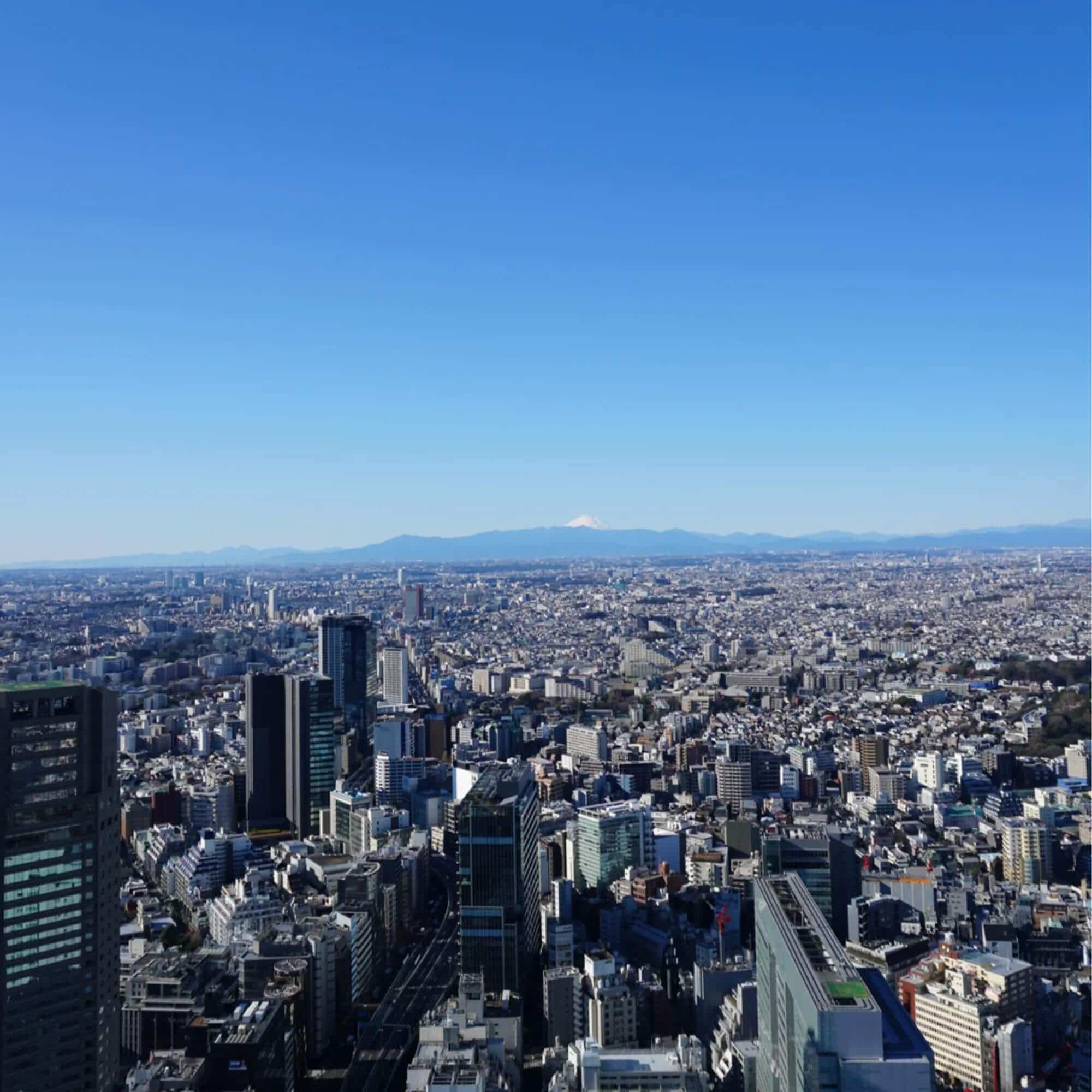
Looking out over the sprawling city filled with card shops from the top of Shibuya Sky
So, how do you begin to navigate a sprawling metropolis where Pokémon card shops are hidden above ramen bars, behind unmarked doors, and up narrow staircases you might otherwise walk straight past?
collection::pokemon-tcg-available::Shop Pokémon TCG::https://gatheringgames.co.uk/collections/pokemon
Where should you visit?
Tokyo is unapologetically overwhelming on a first visit, so it helps to begin with a clear focus on where you want to go. With that in mind, here are some must-visit spots every Pokémon fan should consider when exploring the city’s card scene.
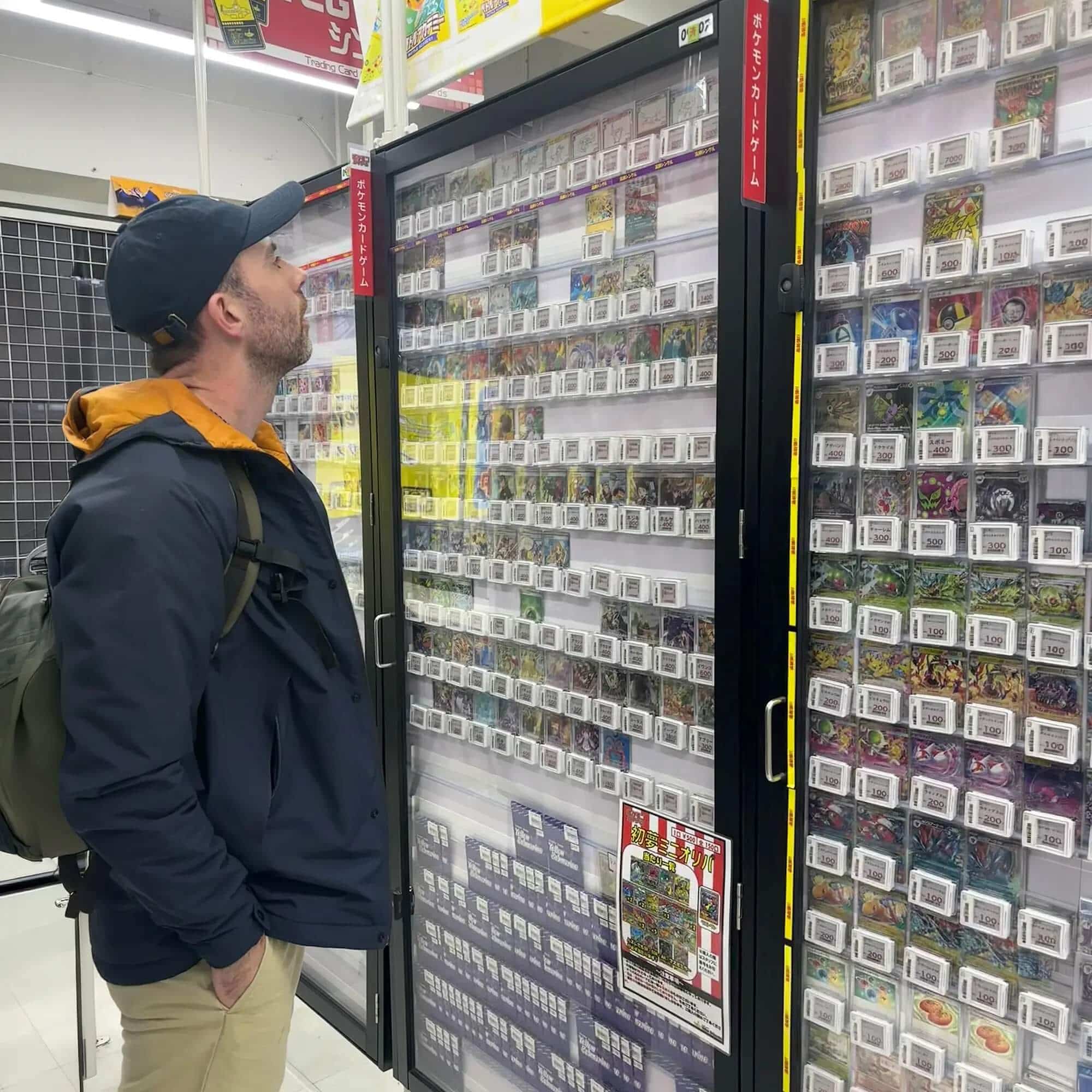 Asking the vendors ‘Showcase?’ to see anything high-end behind glass
 1. Akihabara: The Electric Town With Everything
If there is one stop that every Pokémon fan should prioritise in Tokyo, it is Akihabara. Often described as the city’s electric town, this neon-lit district is where Tokyo’s trading card culture feels most concentrated, chaotic, and rewarding. Card shops sit above arcades, beside electronics stores, and up staircases that reveal glass cabinets packed with Japanese Pokémon cards spanning every era of the game.
A good place to begin is the Radio Kaikan Building, a landmark just outside Akihabara Station. Spread across multiple floors, it houses several hobby and card shops, making it an efficient first stop to get a sense of pricing, availability, and the sheer scale of Japan’s Pokémon TCG scene. Even if you don’t buy anything here, Radio Kaikan helps set expectations for what lies ahead.
From there, it’s worth seeking out PDG Collectors, one of Akihabara’s standout destinations for serious Pokémon fans. Known for its curated selection of Japanese singles, PDG often stocks higher-end cards, rare promos, and beautifully preserved vintage pieces. The presentation is meticulous, with raw singles on one floor and graded slabs on the other. It is exactly the kind of shop where patience pays off.
Akihabara is not about polished experiences or easy wins. It is about volume, variety, and discovery. Prices fluctuate from store to store, stock changes daily, and the best finds are often a short walk away from each other.
For collectors willing to explore and go deep, Akihabara offers the broadest and most authentic snapshot of Japan’s Pokémon TCG ecosystem in one place.
2. Shinjuku: Accessible, Modern, and Surprisingly Strong
Shinjuku may not have Akihabara’s density of card shops, but it more than compensates with accessibility and ease. As one of Tokyo’s main transport hubs, it is often where visitors stay, making it an ideal district for Pokémon fans who want strong card options without committing an entire day to hunting.
One of the most reliable stops here is Yellow Submarine, a familiar name to Japanese collectors. While best known for board games and tabletop, its Shinjuku location carries a solid range of Pokémon cards, accessories, and sealed product. Stock tends to skew modern, making it a good place to pick up Scarlet & Violet singles, playable cards, and official sleeves or deck boxes.
Beyond Yellow Submarine, Shinjuku hosts several well-organised card shops that favour clear pricing and spacious layouts. These stores are typically less cramped than their Akihabara counterparts and more accustomed to international visitors, which makes browsing feel relaxed and efficient.
If you are building decks, hunting competitive staples, or simply want a calmer shopping experience, Shinjuku delivers.
Another advantage of Shinjuku is how easily it pairs with nearby districts. With frequent train connections, it is simple to combine a Pokémon card stop in Shinjuku with an afternoon or evening in Shibuya.
Though it is less densely populated with shops, Card Kingdom Shibuya was the place I landed a staple Pikachu card to commemorate the trip — a 2014 XY promo nonetheless.
collection::pokemon-tcg-available::Shop Pokémon TCG::https://gatheringgames.co.uk/collections/pokemon
3. Ikebukuro: Where the Hunt Meets the Spectacle
After diving into Akihabara’s dense maze of card shops and Shinjuku’s accessible, modern offerings, Ikebukuro gives you something different: a place where the hunt meets the spectacle. This district is home to one of the most iconic Pokémon destinations in Tokyo and a collection of card shops that reward both casual browsing and serious card hunting.
At the heart of Ikebukuro’s Pokémon scene is Pokémon Center Mega Tokyo. Located inside Sunshine City, this flagship Pokémon Center is one of the largest in Japan, packed with exclusive merchandise, seasonal items, and a dedicated Pokémon card station where you can browse and purchase both sealed products and a selection of cards you might not find elsewhere.
Just a short walk away, Ikebukuro’s independent shops offer a more collector-focused experience. Fukufuku, for example, is known for its wide range of Japanese singles and sealed products, often including rare or vintage cards that are difficult to find elsewhere.
LAMB provides a friendly, well-organised browsing environment with competitive and collector-level singles, making it ideal for fans hunting specific cards or meta staples. Finally, BIGMAGIC Ikebukuro rounds out the area with a solid mix of modern staples and occasional rarities, offering an accessible stop for both newcomers and experienced collectors.
Ikebukuro’s layout makes it easy to plan a half-day or full-day Pokémon excursion. You can start at the Mega Tokyo centre, soak in the immersive experience, and then hop between the independent shops, comparing stock and prices without the navigational challenge of Akihabara.
For many collectors, this makes Ikebukuro the perfect final chapter of a Tokyo Pokémon itinerary.
What do you need to know?
Before you dive into Tokyo’s Pokémon card scene, there are a few practical realities every collector should understand.
First and foremost: cash is king. While some of the larger shops (and the Pokémon Center) may accept cards or digital payments, the majority — especially smaller, independent stores — are cash-only. Having yen on hand not only avoids awkward delays at the till, but also gives you more flexibility when negotiating for rarer singles or sealed boxes.
Another useful tip when paying is to ask whether your purchase can be made tax-free. By showing your passport, non-residents are often eligible to have Japan’s consumption tax removed at the till, provided the store participates in the scheme and you meet the minimum spend (usually around 5,000 yen, which equates to roughly £25).
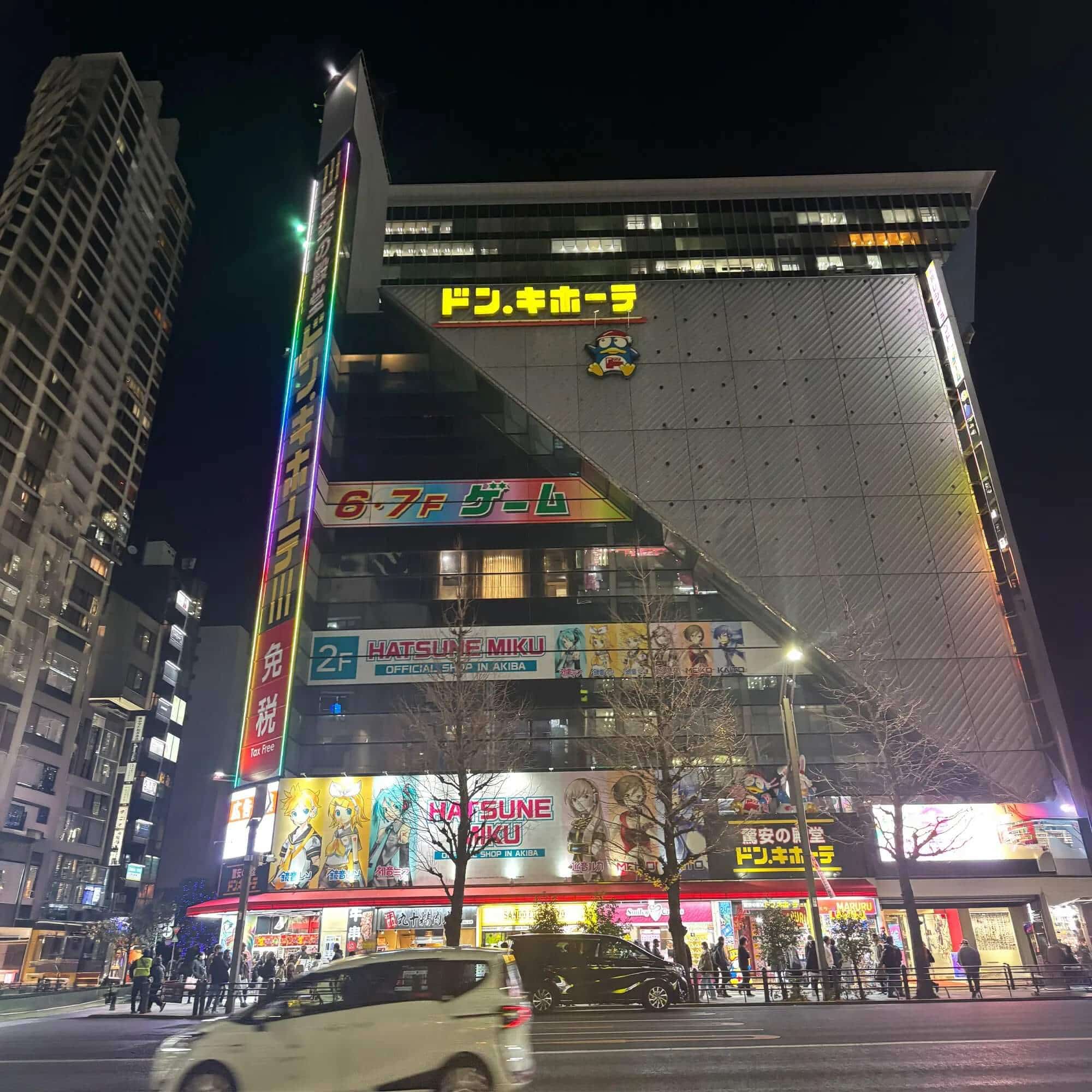 Venturing into Akihabara – home of TCG, manga and more
Next, be aware of the showcase system. Many of the most coveted cards are kept behind glass cabinets, and you will need to ask staff to take them out if you want a closer look. Simply pointing or politely asking to see a card usually works, and using the word “showcase” can help bridge any language gap. This system keeps high-value cards safe, and it also means you can inspect the condition carefully before committing — an essential step for collectors serious about quality.
Another important point is that almost all cards in Tokyo are Japanese-language prints. English cards are rare and often significantly more expensive, so it is worth embracing the local versions. Japanese cards are generally released earlier than their English counterparts, and collecting them gives you access to promos and editions unavailable elsewhere.
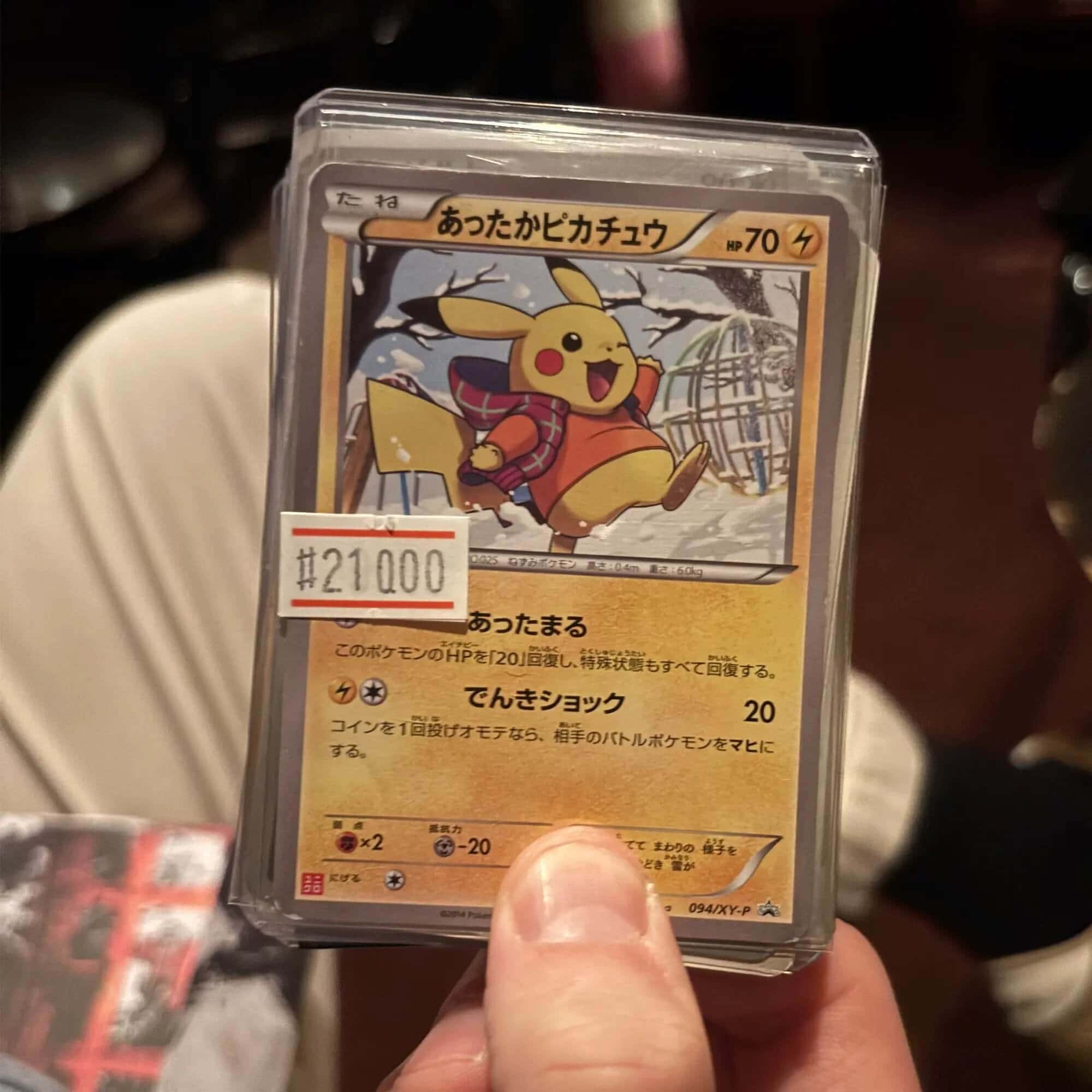
Finally, preparation is key. Bring your own toploaders or sleeves to protect purchases immediately, especially if you are buying high-value singles or sealed boxes. It is also wise to have a price comparison app or reference handy, as prices can fluctuate dramatically between stores — even within the same block.
Every district has its own rhythm, from the thrill of discovery to the convenience of polished browsing, and together they paint a complete picture of Japan’s collector culture.
With a bit of planning, patience, and awareness of local norms, Tokyo becomes a collector’s playground where careful preparation pays off in rare finds and memorable experiences.
Shop and all things Pokémon TCG — including booster boxes and Elite Trainer Boxes — right here at Gathering Games.
collection::pokemon-tcg-available::Shop Pokémon TCG::https://gatheringgames.co.uk/collections/pokemon